
Curasynth / AIDDD 2026
What we brought to Boston.
The innovation pitch and both posters from the AI Drug Discovery & Development Summit, 27–29 October 2026. The slides play the same clips the room saw; the posters download as print-resolution PDFs. Everything here is free to take.
The pitch
Eight slides, five minutes.
Three of them are live runs of the product rather than diagrams — a question answered, a measurement opened to its paper, and a decision kept together in a Program. Those three play here as they played in the room. The backup slides are not included.
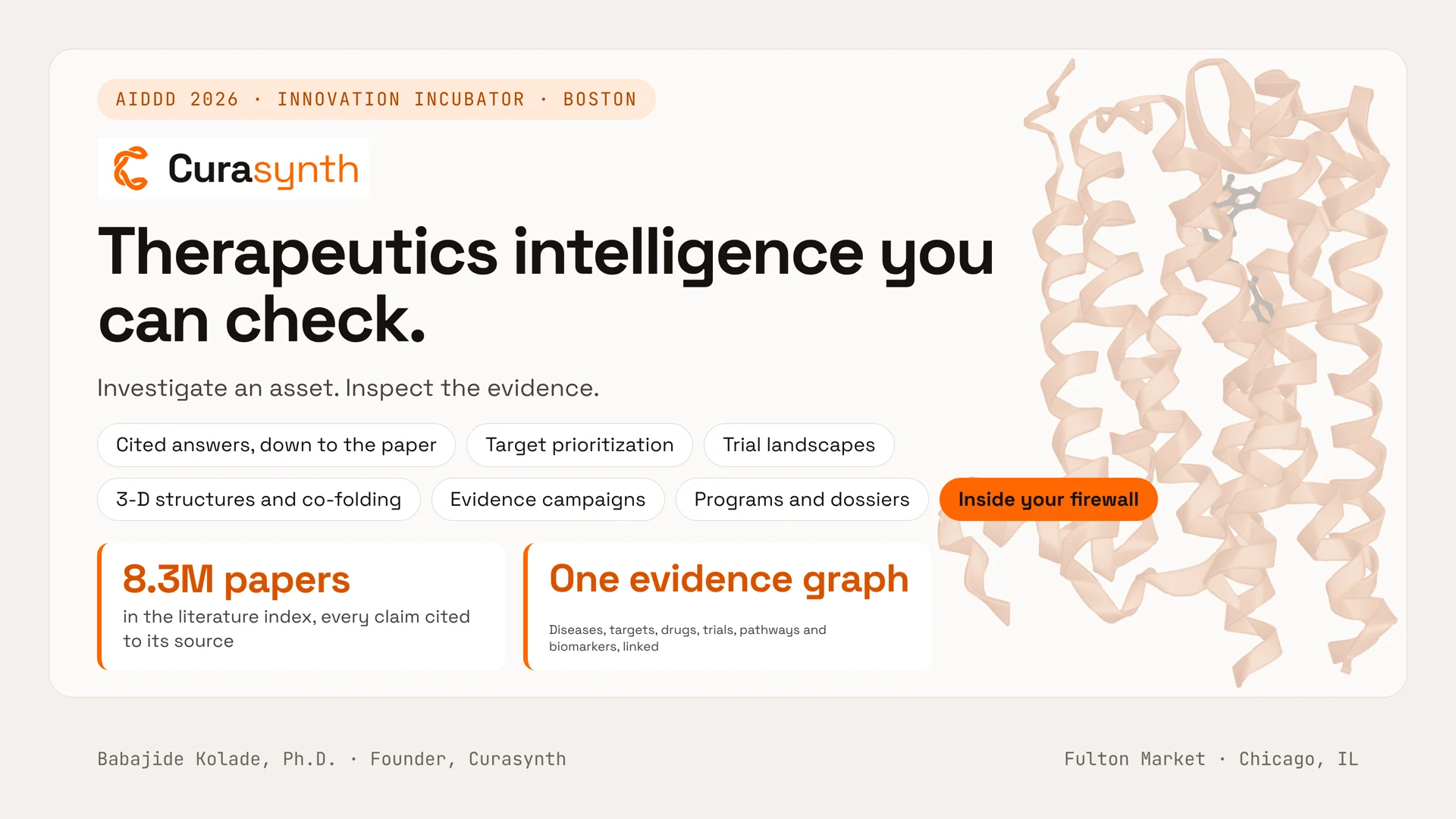
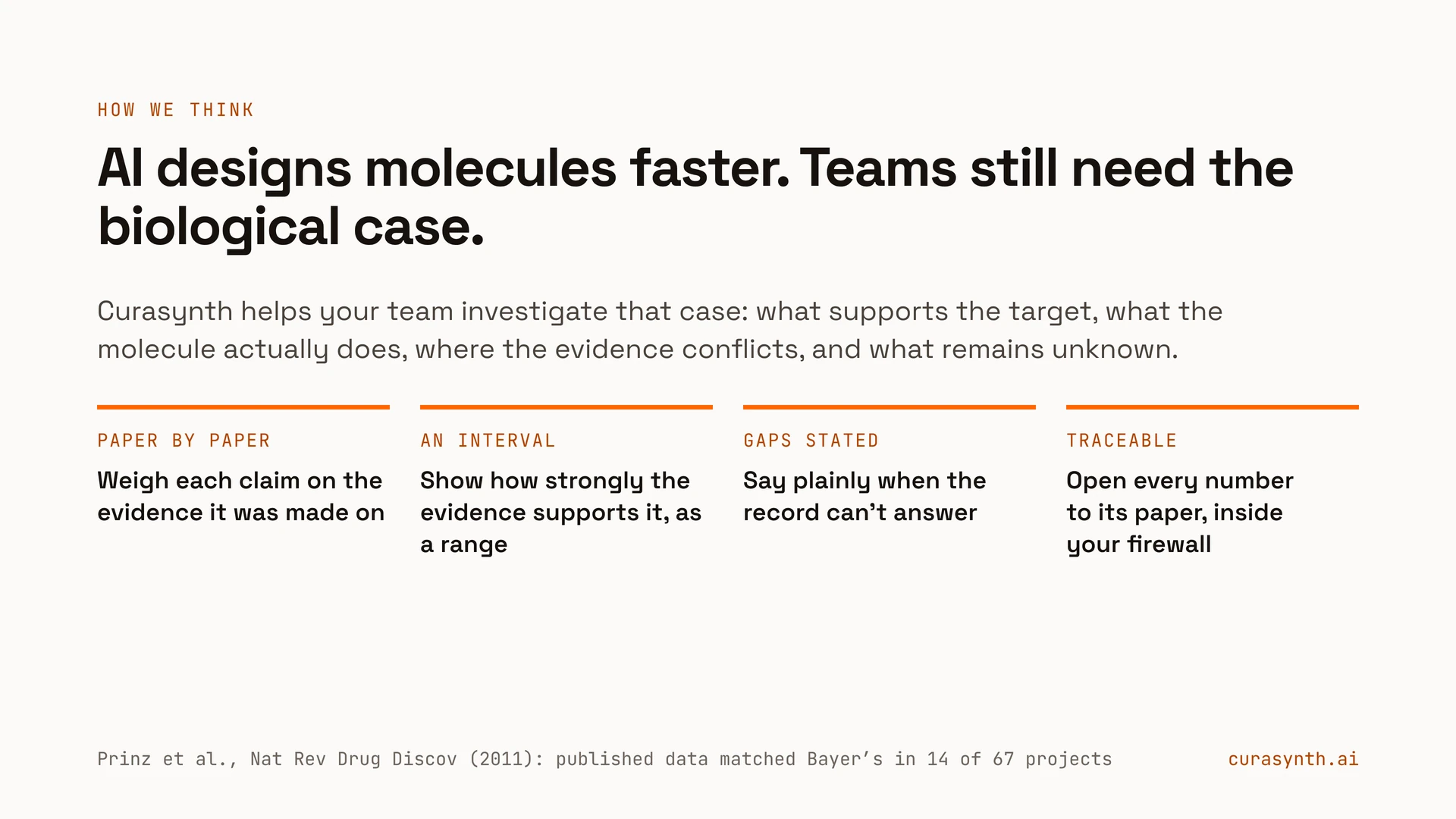
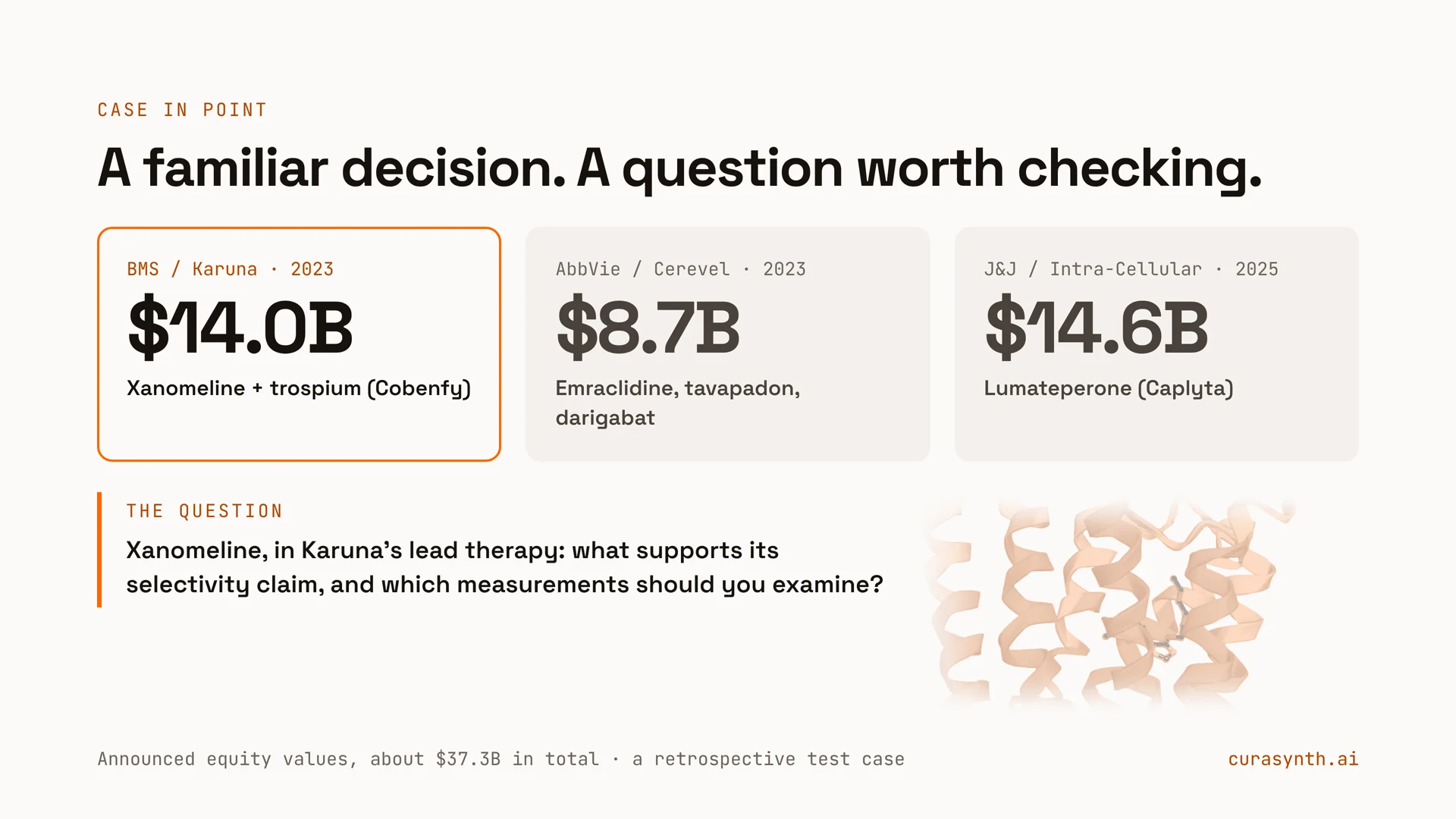
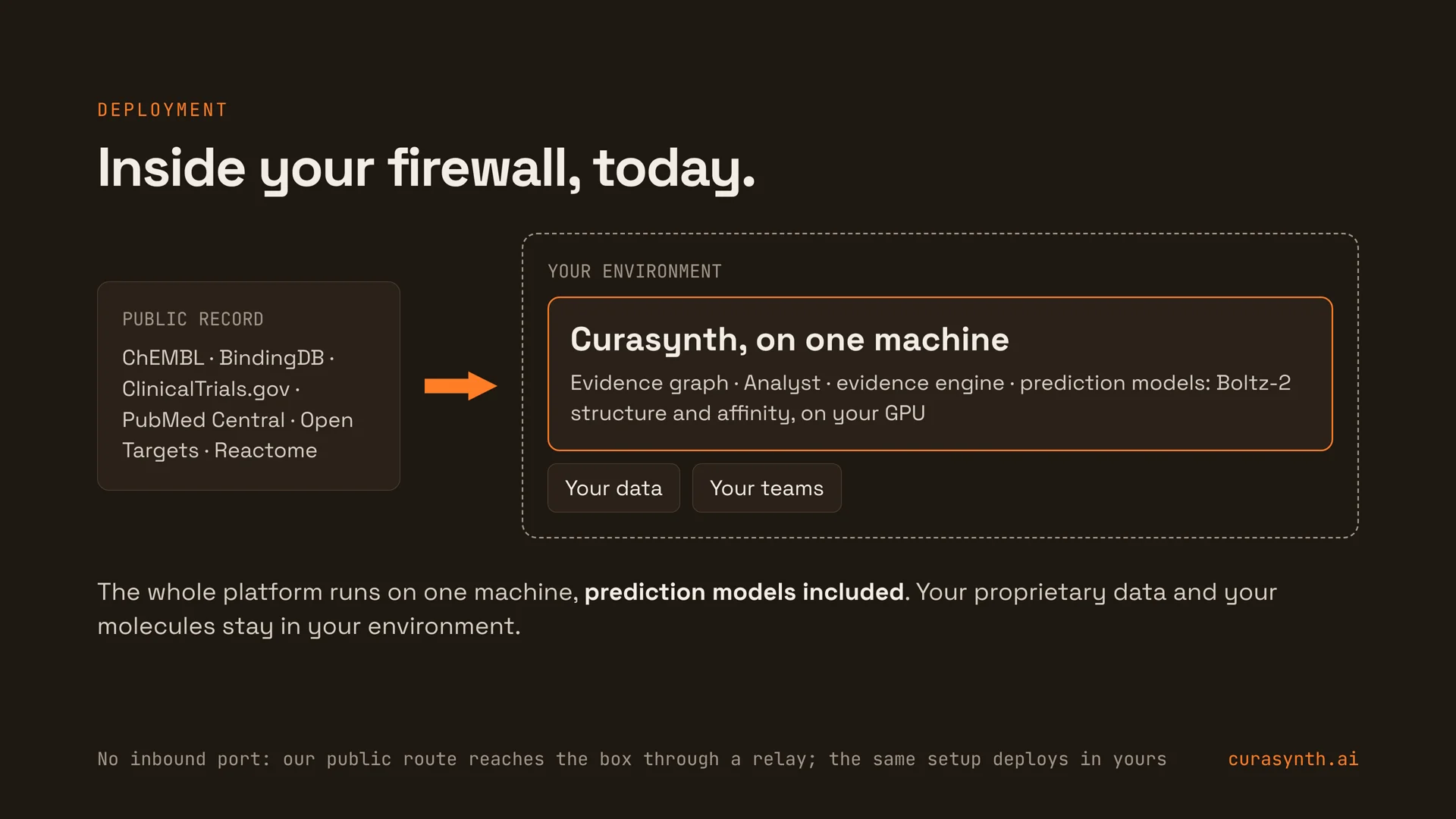
The clips were recorded on 24 October 2026 against the served platform. Each is one uncut run, sped up only while the Analyst works; every speed-up is labeled on screen.
The posters
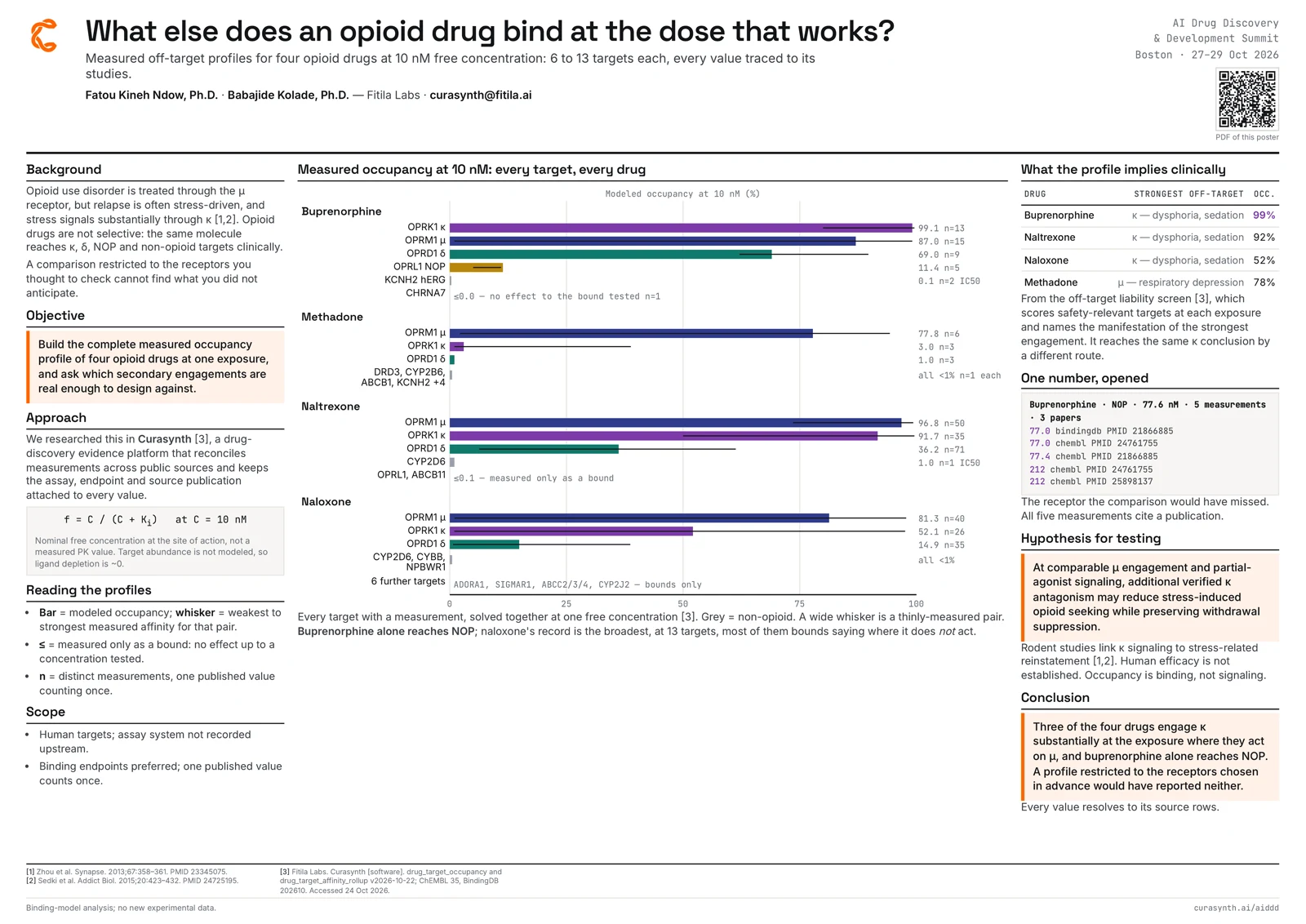
Two boards on what opioid drugs bind besides µ.
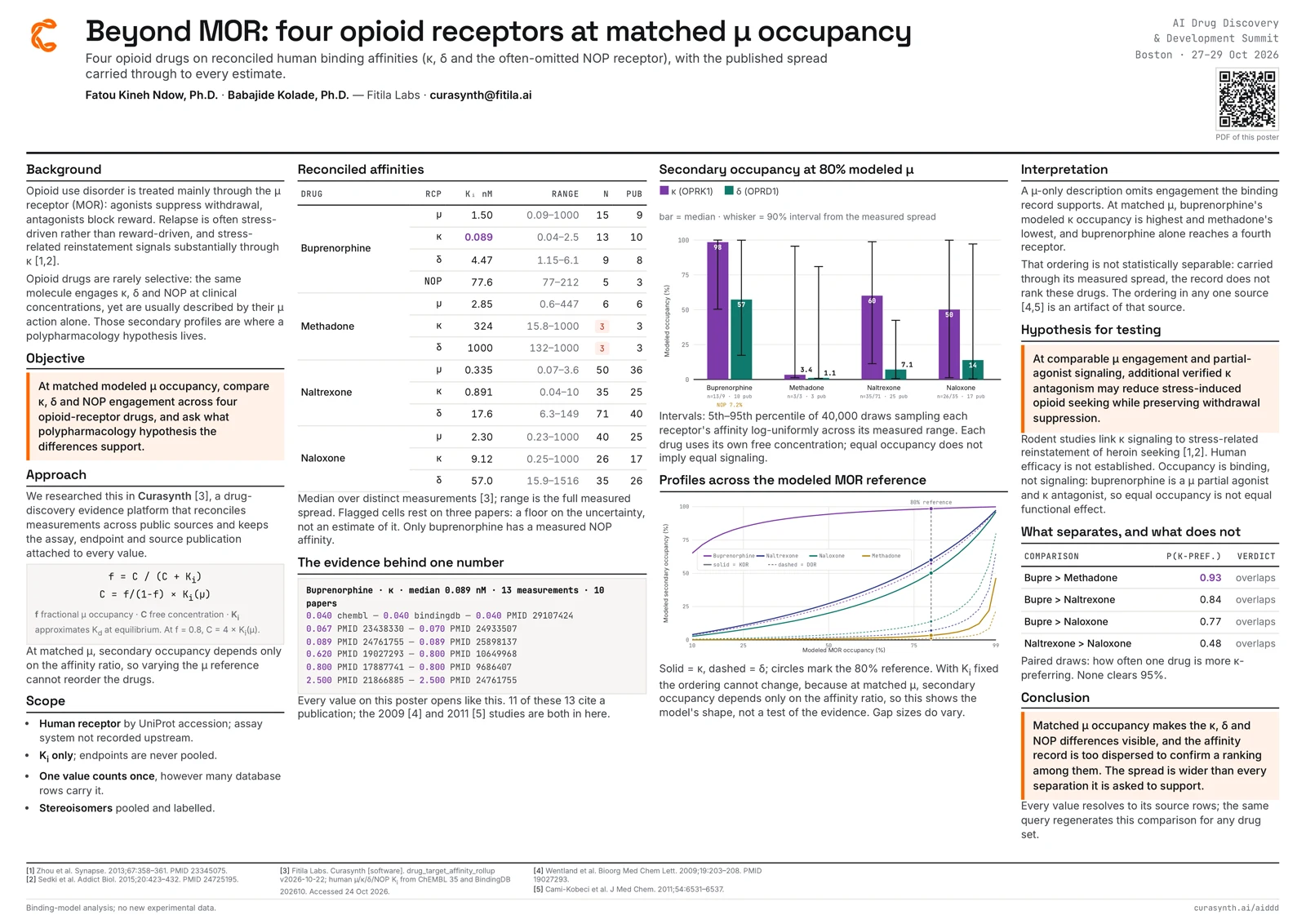
Both are work by Fatou Kineh Ndow, Ph.D. and Babajide Kolade, Ph.D., researched in Curasynth over served tables of 22 October 2026. They ask the same question at two widths: poster A takes four opioid receptors, poster B takes every target with a measurement. Each is A0 landscape, and the PDF is the print file.
One published value counts once
A database files one row per assay context, so a single published measurement can vote several times in a median if nobody stops it. Here it does not: values are reconciled to distinct measurements first, and endpoints are never pooled.
The spread, not just the median
Every estimate carries the full measured range behind it. Where a cell rests on three papers it is flagged — a floor on the uncertainty, not an estimate of it.
An ordering that is visible but not separable
Carried through the measured spread, no pairwise comparison among the four drugs clears 95 %. The closest reaches 0.93. The posters show the ordering and state plainly that it does not rank them.
What we are looking for
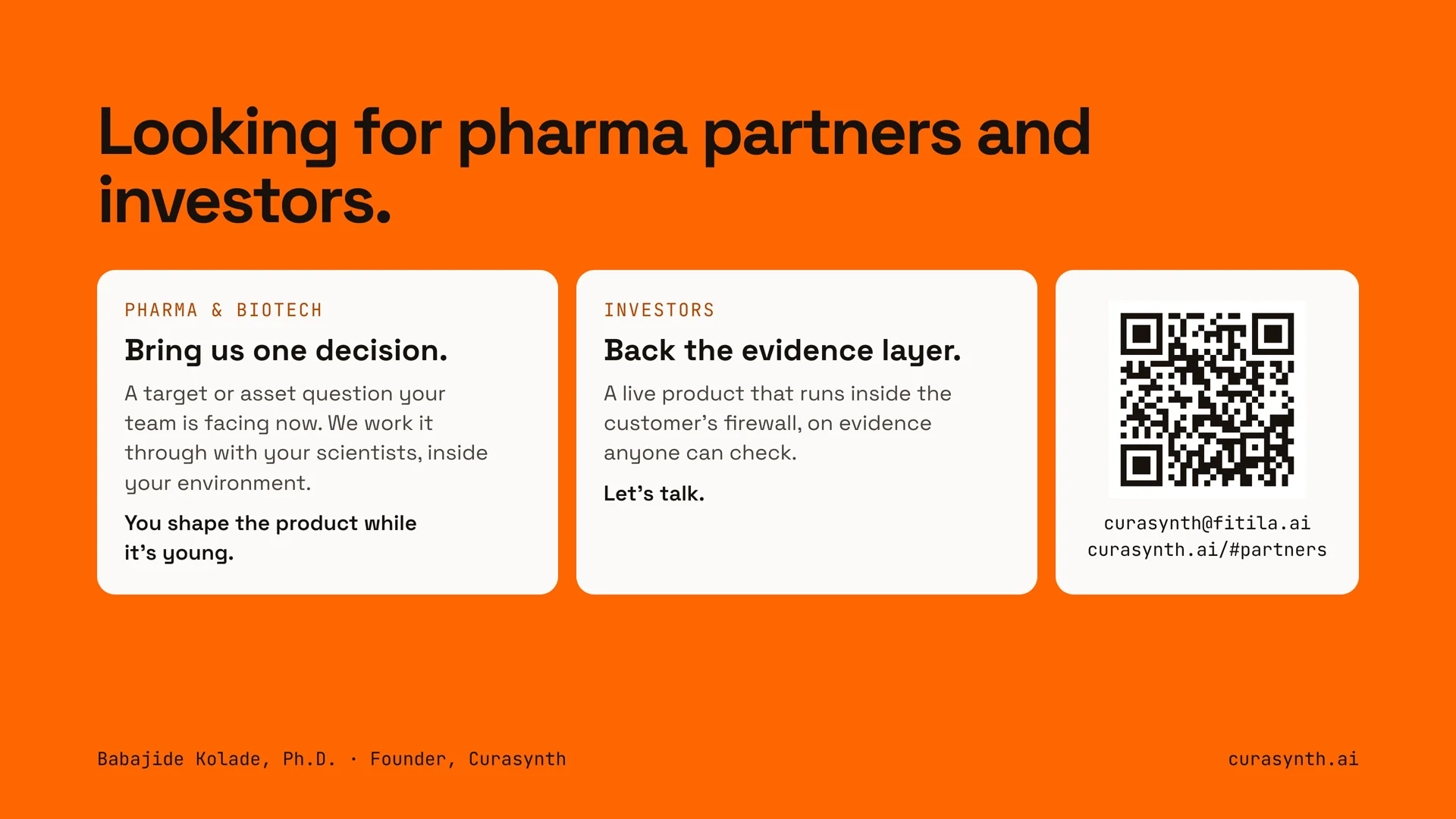
The two asks from slide eight.
If you came past the board in Boston, or found this afterwards, these are still open.
Bring us one decision.
A target or asset question your team is facing now. We work it through with your scientists, inside your environment, and you shape what we build while the product is young.
What we ask for: one real decision in the next few months, one scientist for a couple of hours a week, and candid feedback.
Back the evidence layer.
A live product that runs inside the customer’s firewall, on evidence anyone can check. If you see the evidence layer, not the model, as the durable part of AI in drug discovery, we would like to talk.
Built by six Ph.D.s and two professional engineers, with advisors from Stanford and Caltech.
Start with the product.
The platform is live and the evidence behind every number on these boards is open to inspection in it. The retrospective that slide three draws on is published in full.